
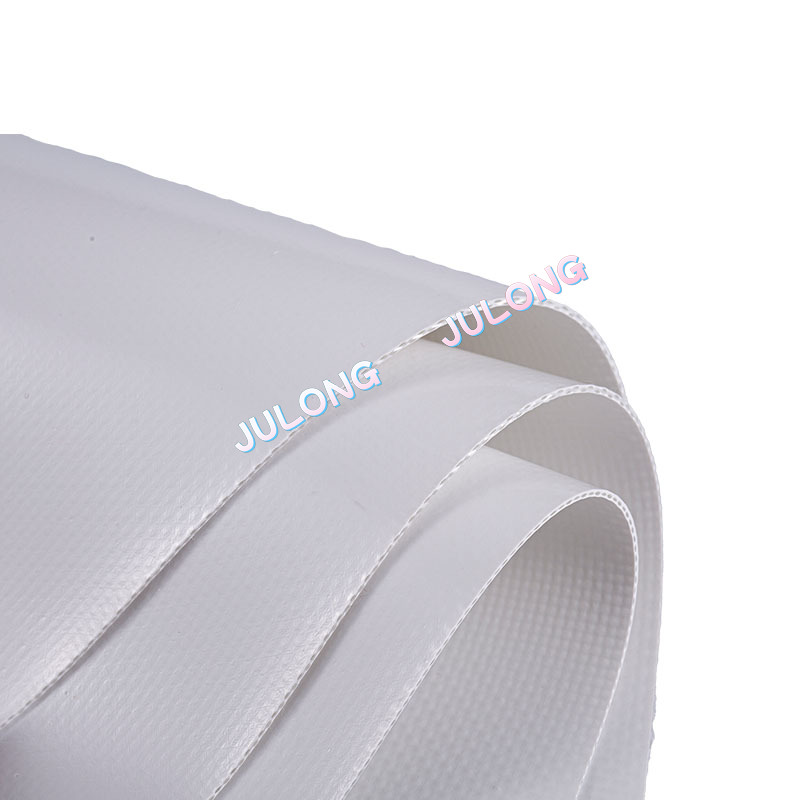
Tarp per la copertura del camion




Polytetrafluoroethylene (PTFE) membrane is a microporous film made from expanded or sintered PTFE — a fully fluorinated polymer with one of the most chemically inert and thermally stable molecular structures found in any engineered material. The base polymer consists of a carbon backbone symmetrically surrounded by fluorine atoms, forming carbon-fluorine bonds that are among the strongest in organic chemistry. This architecture is responsible for virtually every performance advantage PTFE membranes offer over alternative membrane materials.
The most widely used production method for high-performance PTFE membranes is the expanded PTFE (ePTFE) process, developed commercially in the 1970s. In this process, PTFE paste is extruded and calendered into a thin film, which is then rapidly stretched — biaxially or uniaxially — at elevated temperature to create a characteristic node-and-fibril microstructure. The nodes are dense PTFE masses interconnected by very fine fibrils, and the spaces between them form a continuous network of pores that gives the membrane its filtration and breathability characteristics. Pore size, porosity, thickness, and mechanical properties can all be controlled by adjusting the expansion ratio, temperature, and subsequent sintering conditions, allowing manufacturers to engineer membranes for very specific performance targets.
PTFE membrane possesses a combination of properties that is unique in the membrane materials landscape. No single competing material replicates all of these characteristics simultaneously, which is why PTFE remains the material of choice across such a wide range of demanding applications.
PTFE membrane is resistant to virtually all industrial chemicals, including concentrated acids (sulfuric, nitric, hydrofluoric), strong alkalis, organic solvents, oxidizing agents, and most aqueous solutions across the full pH range of 0–14. The only chemicals capable of attacking PTFE under practical conditions are molten alkali metals and elemental fluorine at elevated temperatures — substances encountered in very few industrial processes. This near-universal chemical inertness means PTFE membranes can be used for filtration of aggressive process streams that would rapidly destroy nylon, polyethersulfone (PES), polypropylene, or other common membrane materials.
PTFE membrane operates continuously at temperatures from -196°C (cryogenic liquid nitrogen service) up to +260°C, with short-term excursions tolerated above that in many configurations. This thermal range exceeds that of all common thermoplastic membrane materials — polyethylene membranes are limited to approximately +80°C, nylon to around +120°C, and polypropylene to +100°C. PTFE membranes also exhibit excellent dimensional stability across this range, maintaining their pore structure and mechanical integrity without creep, softening, or embrittlement.
Unmodified PTFE membrane is inherently hydrophobic, with a water contact angle typically above 120°. Liquid water cannot pass through the membrane under low applied pressure, but water vapor and gases pass freely through the interconnected pore network. This combination of liquid water barrier and vapor permeability is the physical basis for the membrane's use in waterproof-breathable textiles and venting applications. PTFE can also be treated with oleophobic surface coatings to resist low-surface-tension liquids such as oils, fuels, and surfactant-containing solutions, enabling reliable liquid filtration in contaminated or chemically complex environments.
Expanded PTFE membranes exhibit a useful combination of tensile strength and elongation, with the node-and-fibril structure distributing stress effectively across the membrane plane. Biaxially expanded grades provide more isotropic mechanical properties than uniaxially expanded material, making them preferable for applications where the membrane must resist stress in multiple directions simultaneously. PTFE membranes also have excellent fatigue resistance under cyclic pressure loading — a critical property in pulse-jet cleaned filtration systems and pressure cycling service.
| Property | PTFE | Nylon (PA) | PES | Polypropylene |
| Max operating temp | +260°C | +120°C | +140°C | +100°C |
| Chemical resistance | Outstanding | Moderate | Good | Good |
| Hydrophobicity | Inherently hydrophobic | Hydrophilic | Hydrophilic | Hydrophobic |
| Biocompatibility | Excellent | Good | Good | Good |
| Relative cost | High | Low | Low–moderate | Low |
Industrial gas and liquid filtration represents the largest application segment for PTFE membranes. In air pollution control and industrial dust collection, PTFE membrane filter bags are used in baghouse systems handling high-temperature, corrosive, or sticky particulate streams that rapidly destroy conventional woven or needlefelt filter media. The smooth, non-stick PTFE membrane surface prevents dust cake from bonding to the filter, enabling very effective pulse-jet cleaning and maintaining low pressure drop over long service intervals. Applications include cement and lime kilns, secondary aluminum smelters, waste incinerators, chemical process exhausts, and coal-fired power plant flue gas cleaning systems.
In liquid filtration, PTFE membranes serve critical functions in the pharmaceutical, semiconductor, and chemical processing industries. Sterile filtration of pharmaceutical products and process gases requires membranes that combine precise pore size control (typically 0.2 µm for bacterial retention), complete chemical compatibility with the product stream, and no extractable compounds that could contaminate the filtrate. PTFE membranes meet all three requirements and are widely used for sterile venting of bioreactors and storage tanks, filtration of aggressive solvents and reagents, and final filtration of parenteral drug products.
The waterproof-breathable textile industry is built almost entirely on the unique property combination of ePTFE membrane — specifically, its ability to block liquid water while allowing water vapor to pass freely. A water droplet is approximately 100 µm in diameter and cannot penetrate the membrane's pore structure under normal rainfall or splash conditions. A water vapor molecule, by contrast, is roughly 0.0004 µm — many orders of magnitude smaller than the pores — and diffuses through freely, allowing sweat vapor generated by the body to escape and maintaining thermal comfort during physical activity.
In performance outdoor and protective clothing, ePTFE membranes are typically laminated between an outer face fabric and an inner lining fabric to create a three-layer composite that can be cut and sewn into garments. Military and emergency services applications extend beyond comfort to include chemical and biological agent protection, where the membrane's impermeability to liquid chemical warfare agents while maintaining breathability is operationally critical. PTFE membrane is also used in protective suits for chemical plant workers, in waterproof footwear constructions, and in glove laminates for cold and wet conditions.
PTFE membrane's biocompatibility, chemical inertness, and precise pore control make it well suited to a range of medical and life sciences applications. In implantable medical devices, expanded PTFE (ePTFE) is used as a vascular graft material for arterial bypass surgery, as a surgical membrane for guided tissue regeneration in periodontal and bone surgery, and as a soft tissue patch material. The porous ePTFE structure encourages controlled tissue ingrowth at the membrane surface while the material itself evokes minimal inflammatory response — a combination that has proven clinically durable over decades of use.
In laboratory and analytical applications, PTFE membranes are used for sample preparation filtration, solvent filtration for HPLC mobile phases, protein binding assays, and diagnostic test device construction. PTFE's low non-specific protein binding — a consequence of its non-polar, inert surface — makes it preferable to nylon or cellulose membranes in applications where protein adsorption to the membrane would compromise analytical results or reduce yield.
The semiconductor industry uses PTFE membranes extensively in the filtration of ultra-high-purity process chemicals, deionized water, and process gases. Contamination levels measured in parts per trillion can affect yield in advanced semiconductor fabrication, and the filtration membranes used must introduce no extractables, particles, or ionic contamination into the process stream. PTFE membranes meet these ultra-purity requirements and are compatible with the strongly oxidizing chemicals (such as hydrogen peroxide, ozone-enriched water, and sulfuric acid/hydrogen peroxide mixtures) used in wafer cleaning processes.
PTFE membranes are also used in electronic enclosure venting — small membrane vent assemblies that allow pressure equalization between the interior and exterior of sealed electronic housings while preventing liquid water, dust, and contaminants from entering. As electronic housings heat up and cool down during operation and storage, internal pressure changes can drive moisture ingress through any unsealed opening. A PTFE vent membrane allows pressure equalization through gas permeation while the hydrophobic membrane surface prevents liquid ingress, protecting sensitive electronics in automotive, outdoor, and industrial enclosure applications.
With multiple PTFE membrane configurations available — varying in pore size, thickness, support laminate, surface treatment, and form factor — selecting the right product requires careful matching of membrane characteristics to application requirements. Key parameters to define include:
PTFE membrane's combination of chemical universality, thermal range, precise pore control, and long service life positions it as the premium choice across filtration, protective textile, medical, and electronic applications. Its higher cost relative to alternative membrane materials is consistently justified by performance reliability and service life in conditions where other membranes fail.
Cooperazione vantaggiosa con vecchie e vecchie clienti, crea il futuro.

No. 9, Xingang Avenue, Ningguo City, Provincia di Anhui, Cina.


+86 15397280550
Copyright © Anhui Longsheng New Material Technology Co., Ltd. Produttori di materiali a membrana di architettura Fornitore di tessuti impermeabili in PVC esterno
